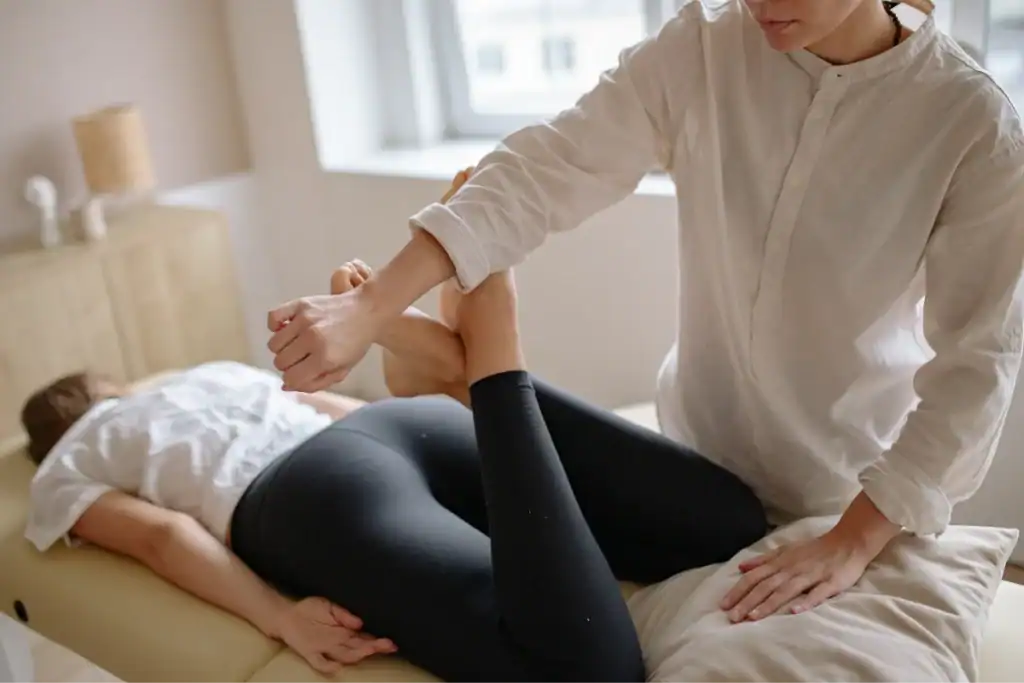
The way you move through life may be influencing how your body feels.
Have you ever wondered why the same areas of your body continue to feel tight, restricted, or uncomfortable?
Sometimes the answer isn’t just where you’re experiencing pain. It may also involve how your body is aligned and how you’re moving throughout your day.
The way you stand, walk, sit, bend, reach, and perform everyday activities places different demands on your muscles, joints, and connective tissues.
Over time, certain movement habits, imbalances, and compensations may contribute to unnecessary strain and recurring discomfort.
At Hands On Wellness, I help you understand those patterns and explore ways to move with greater awareness, balance, and ease.
Looking at the Whole Body
Your body doesn’t move in isolated pieces.
Your feet, knees, hips, pelvis, spine, and shoulders all influence how you stand and move.
When one area has limited mobility or isn’t functioning efficiently, another area may compensate.
For example, restrictions in your hips may influence how you walk, while limited movement in your shoulders may change how you use your neck and upper back.
By observing your alignment and movement, we can begin identifying patterns that may be contributing to discomfort or fascial restrictions.
Individual Body Mechanics Sessions
I offer individual Body Mechanics appointments focused specifically on your alignment, movement patterns, and how you use your body in everyday life.
During these sessions, we’ll explore how you stand, walk, sit, bend, reach, and perform activities that are part of your daily routine.
I’ll observe how your body is moving, identify areas of restriction or compensation, and help you recognize patterns that may be placing unnecessary strain on your body.
Together, we’ll explore practical adjustments and movement techniques suited to your individual needs.
My goal is to help you better understand how your body functions so you can make meaningful changes in the way you move throughout your day.
How Body Mechanics and Myofascial Release Work Together
Myofascial Release and Body Mechanics are closely connected in my approach to care.
Myofascial Release focuses on addressing restrictions in the fascia and surrounding soft tissues.
Body Mechanics helps us explore how your alignment and movement patterns may be contributing to ongoing tension or restriction.
For example, we may address an area of fascial restriction during a Myofascial Release session, then look at how you’re standing, walking, or performing everyday activities to identify patterns that may be placing repeated strain on that area.
By incorporating Body Mechanics into Myofascial Release sessions, I can help you become more aware of the movements and habits that may be contributing to recurring discomfort.
The intention is not only to address what you’re feeling today, but also to help you better understand what may be influencing those patterns in your daily life.
Who Can Benefit From Body Mechanics?
Body Mechanics may be helpful if you:
- Experience recurring tension, discomfort, or restricted movement
- Notice differences in alignment or movement between the two sides of your body
- Feel that certain activities place unnecessary strain on your body
- Spend long periods sitting, standing, or performing repetitive movements
- Want to understand how your daily activities may influence fascial restrictions
- Are physically active and want to improve movement efficiency
- Want to develop greater awareness of how your body is aligned and functioning
You don’t have to be experiencing pain to benefit from understanding your movement patterns.
Awareness Creates Opportunity for Change
Many of the ways we move become so familiar that we rarely stop to think about them.
Sometimes simply recognizing how your body is positioned, where you’re compensating, or which movements are creating strain can open the door to new possibilities.
Body Mechanics is about giving you the knowledge and awareness to make choices that support greater comfort and freedom of movement.